
Paint Correction · Franklinton
Paint correction in Franklinton.
Mobile paint correction in Franklinton. Franklinton is a small Franklin County town along the US-1 corridor with mostly rural-residential character, so agricultural and logging-truck traffic on local roads means cars accumulate tar and bug residue quickly. We bring the rig to your driveway and run the job hand-tight — no tunnel-wash shortcuts, no upsells while the polisher is running.
Get a Franklinton quote → See full paint correction service
5.0 from 37 local reviews
STRAIGHT ANSWER
Machine paint correction in Franklinton. Paint depth measured first, one-step or two-stage based on what your paint shows. We come to your property anywhere in Franklin County.
What sets Franklinton apart: a small Franklin County town along the US-1 corridor with mostly rural-residential character.
LOCAL CONTEXT · FRANKLINTON
What paint correction looks like in Franklinton.
Franklinton is a small Franklin County town along the US-1 corridor with mostly rural-residential character. Most of our paint correction work in Franklinton comes from downtown Franklinton, county-route properties off NC-56. Local climate note: pollen here lasts a week or two longer than Raleigh — we plan late-April clay-bar work for Franklinton bookings. One thing we always adjust for in Franklinton: agricultural and logging-truck traffic on local roads means cars accumulate tar and bug residue quickly.
BEFORE YOU BOOK
When to book it, and what to expect.
When paint correction is worth doing
Three things usually trigger the call. You bought the car new, kept up with maintenance, and now in raked light there's a fine spiderweb pattern across the hood from tunnel washes. Or it's a used buy and the previous owner ran it through brush washes religiously, so the clear coat looks like a chain link fence under direct sun. Or you're getting ready for a coating, a wrap, or a sale, and the paint needs to be at its best before the next step locks the current state in for years. Each one starts the same way: a gauge reading on every panel, a written plan, and a number that doesn't change once we start.
What the walk-around looks like
First 20 to 30 minutes you'll be talking to me at the side of the car, not watching from inside. I'm reading the gauge on every major panel, marking defects with painters tape, telling you which ones polish out and which ones need a body shop. Factory clear coat measures 50 to 80 microns. Each polish pass takes 1 to 3. Below 30 and the panel gets hand-finishing only, which I'll show you on the gauge so the math is visible. Quote that follows the walk is fixed for what we walked. If something new turns up during the work, you hear about it before any pad goes back on the polisher.
The Franklinton wrinkle
In Franklinton specifically, the most common reason a paint correction booking gets pushed back a week is agricultural and logging-truck traffic on local roads means cars accumulate tar and bug residue quickly. We try to flag that during the walk-around so the timeline holds.
Ready for paint correction in Franklinton?
Free walk-around quote. We come to you — most requests get a text back within 2 business hours.
WHAT WE SEE IN FRANKLINTON
What this looks like for Franklinton drivers.
Franklinton vehicles often have heavier UV-induced clearcoat haze from outdoor parking plus stone-chip damage along front-end leading edges from rural-road and US-1A driving. Paint correction handles the haze; we tell you at the walk-around what stone-chip damage won't fully come out.
WHAT WE LOOK AT
What a paint correction walk-around covers
The diagnosis is the actual work. Here is what we check before we touch your vehicle, and why each one matters.
WHAT WE DELIVER ON THE JOB
The work, step by step.
Every job follows the same checklist. We do not skip steps to hit a price, and we do not add steps without telling you. Here is the full sequence on a paint correction job.
RESULT YOU CAN SEE
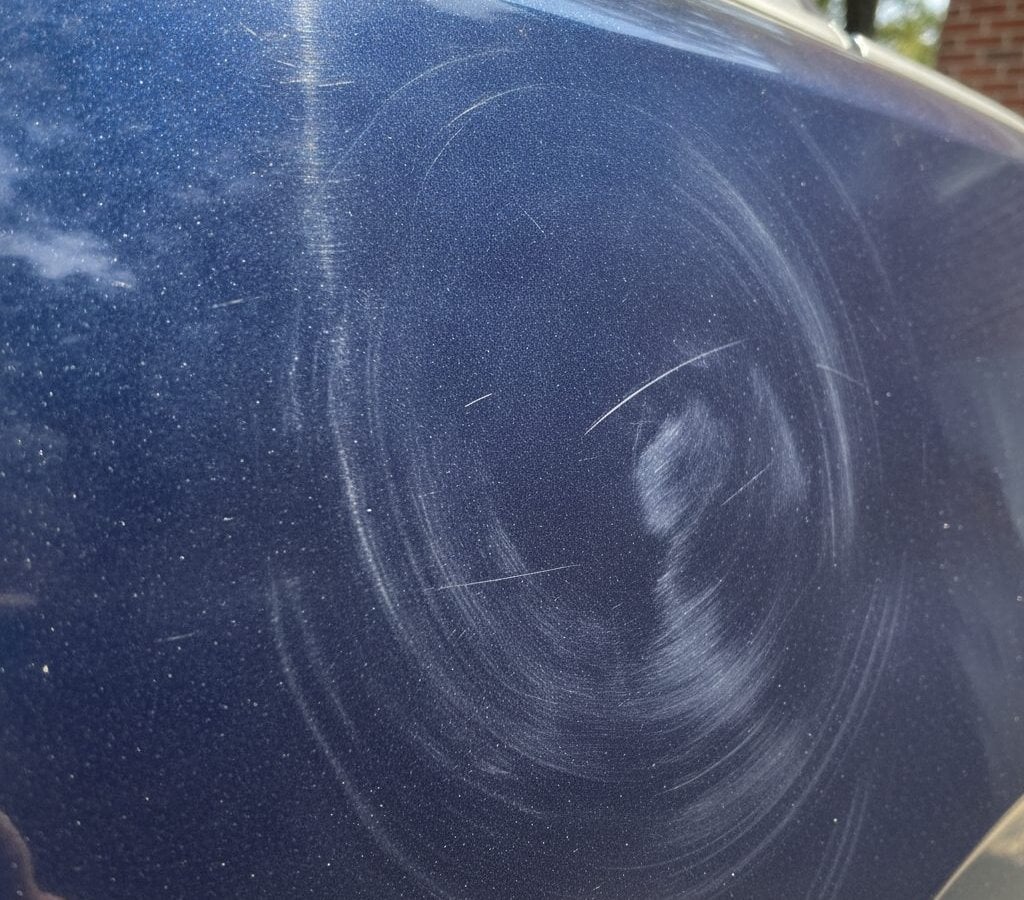
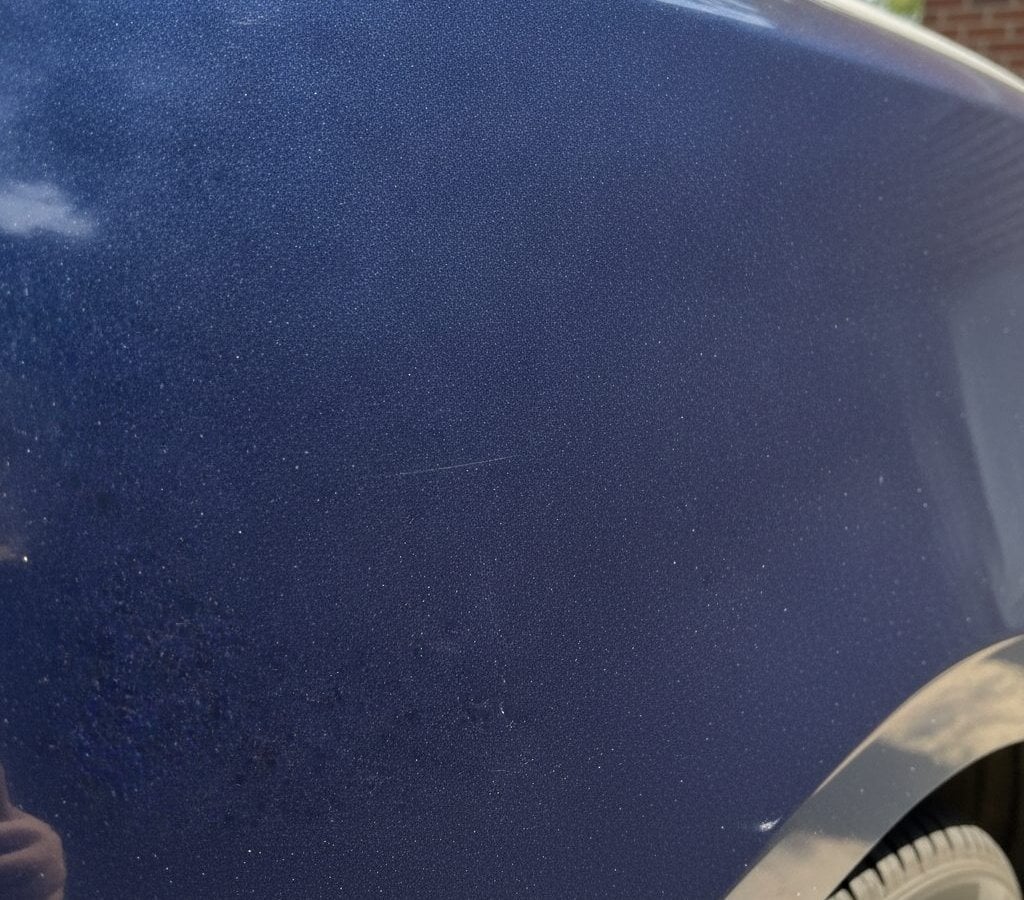
Before. After. Same vehicle, same day.
A recent paint correction job in Franklinton. We photograph every job at delivery — these are real customer cars, not stock photos.
PROCESS
How the job runs, start to handoff.
Measure
Paint thickness gauge on every panel. We do not polish blind.
Prep
Decon wash, iron remover, clay bar to give us a clean surface.
Test panel
Polish a small area to dial in compound, pad, and pressure.
Correct
Section by section, panel by panel, cross-hatch pattern.
Refine
Finer polish to clear up haze from the cut.
Wipe
IPA wipe to strip polish oils and reveal the real finish.
Protect
Sealant or wax. Corrected paint without protection oxidizes again fast.
WHAT THE RALEIGH-AREA CLIMATE DOES TO PAINT
The local conditions paint correction has to handle.
UV and heat
Roughly four months a year you'll see 90-plus afternoons here. UV index hits 9 or 10 on a clear July day. Paint that lives outside takes a measurable hit every season. Sealants flash off faster. Carnauba wax melts off the panel inside a month once summer settles in. So the chemistry we run is UV-stable across the board, with reapplication intervals built around NC sun.
Pollen and tree sap
Wake and Durham counties grow oaks, pines, and tulip poplars in tight canopy. Spring pollen coats every vehicle for six to eight weeks. Summer sap drops on parked cars year-round. Both are acidic on the clear coat if they sit. Quarterly decon isn't a luxury here. It's what keeps the paint surface honest. We size the wash schedule to your specific street and tree mix.
Brine and freeze-thaw
NC DOT pre-treats every winter weather event with brine. We get less salt than the mountains, but enough that undercarriage neglect turns into visible corrosion inside three to five years. A salt rinse after each brine event, plus an undercarriage flush in early spring, keeps frame rust from showing up at the resale inspection.
Franklinton specifics
In Franklinton, the climate detail that drives our schedule is this: pollen here lasts a week or two longer than Raleigh — we plan late-April clay-bar work for Franklinton bookings. The way driveways here sit (long rural drives are the norm; gravel approaches common) changes our setup more than people expect.
What Franklinton customers say
-
★★★★★
The team did a great job at restoring the black paint on my 12 year old car. It was covered in unsightly water spots and now it looks spectacular. Thanks! So happy we were able to get those water spots…
Gym K. · Raleigh -
★★★★★
Thorough, efficient, timely, courteous service and worth every cent! If you've been hesitant about securing a mobile car detail service - you can put your worries away and hire this company today. My car looks like new inside and out.
Ingrid W. · Raleigh -
★★★★★
The interior of my vehicle looks brand new. Amazing work! Punctuality, professionalism, quality.
Jake V. · Raleigh
FAQS
Common questions for paint correction in Franklinton.
How long does it last?
The correction itself is permanent — those defects are gone. New defects accumulate from washing, weather, and use, so the finish degrades over time. A ceramic coating on top extends the looks-corrected window.
Does Franklinton weather change how you handle paint correction?
Pollen here lasts a week or two longer than Raleigh — we plan late-April clay-bar work for Franklinton bookings. That is built into how we schedule and prep jobs here rather than something we discover on arrival.
Can you set up in a Franklinton driveway like mine?
Almost certainly. Driveways here are long rural drives are the norm; gravel approaches common, and the rig adapts to the space — we work downtown Franklinton and every other part of town weekly.
NEXT STEP
Need paint correction in Franklinton?
Tell us about the vehicle. We come walk it, write a real treatment plan, and back the work with a written guarantee.
Book paint correction in Franklinton
Fast reply by text — takes 30 seconds.