
Paint Correction · Wake Forest
Paint correction in Wake Forest.
On-site paint correction for Wake Forest residents. Dogwood and azalea blooms drop pollen and petal residue that needs hand-removal in spring. We come to your driveway with water, power, and a written walk-around quote before any work starts.
Get a Wake Forest quote → See full paint correction service
5.0 from 37 local reviews
STRAIGHT ANSWER
A steady share of Wake Forest correction work is buffer-trail repair: holograms left by a previous quick-shine job that look fine in shade and awful in sun down Capital. Fixing that is exactly what staged machine correction is for. We measure the paint first, since twice-polished panels have less budget, then cut and refine until the finish reads clean under inspection lighting. Heritage and Hasentree garages make excellent work bays, and gate access is routine for us. Spring bookings should account for petal and pollen fallout, which we manage around during wet stages.
For Wake Forest specifically: dogwood and azalea blooms drop pollen and petal residue that needs hand-removal in spring.
LOCAL CONTEXT · WAKE FOREST
What paint correction looks like in Wake Forest.
Seasonally, April-May petal and pollen recovery is the heaviest window. The Wake Forest garage mix runs to country-club household fleets: newer SUVs, a truck, and often one garaged nice car. Driveways here are long concrete drives in the country-club communities, narrower drives in historic downtown, which shapes how we set up the rig. Local climate note: dogwood and azalea blooms drop pollen and petal residue that needs hand-removal in spring.
BEFORE YOU BOOK
Is it time? How Wake Forest owners usually decide.
When paint correction is worth doing
Three things usually trigger the call. You bought the car new, kept up with maintenance, and now in raked light there's a fine spiderweb pattern across the hood from tunnel washes. Or it's a used buy and the previous owner ran it through brush washes religiously, so the clear coat looks like a chain link fence under direct sun. Or you're getting ready for a coating, a wrap, or a sale, and the paint needs to be at its best before the next step locks the current state in for years. Each one starts the same way: a gauge reading on every panel, a written plan, and a number that doesn't change once we start.
What the walk-around looks like
First 20 to 30 minutes you'll be talking to me at the side of the car, not watching from inside. I'm reading the gauge on every major panel, marking defects with painters tape, telling you which ones polish out and which ones need a body shop. Factory clear coat measures 50 to 80 microns. Each polish pass takes 1 to 3. Below 30 and the panel gets hand-finishing only, which I'll show you on the gauge so the math is visible. Quote that follows the walk is fixed for what we walked. If something new turns up during the work, you hear about it before any pad goes back on the polisher.
The Wake Forest wrinkle
When we plan a paint correction job in Wake Forest, the local detail we always confirm before we book is access. Long concrete drives in the country-club communities, narrower drives in historic downtown. That shapes whether we set up curbside or pull into the drive.
Ready for paint correction in Wake Forest?
Free walk-around quote. We come to you — most requests get a text back within 2 business hours.
WHAT WE SEE IN WAKE FOREST
What this looks like for Wake Forest drivers.
WF's long-commute vehicles often have bug-residue etching across the front of the vehicle plus brake-dust contamination on the wheels and lower body. Correction here typically focuses on the leading edges first, then the rest of the body. We always quote based on what we see at the walk-around — no flat 'correction fee' because the work scales with what's there.
WHAT WE LOOK AT
What we check on every Wake Forest visit
The diagnosis is the actual work. Here is what we check before we touch your vehicle, and why each one matters.
WHAT WE DELIVER ON THE JOB
The work, step by step.
Every job follows the same checklist. We do not skip steps to hit a price, and we do not add steps without telling you. Here is the full sequence on a paint correction job.
RESULT YOU CAN SEE
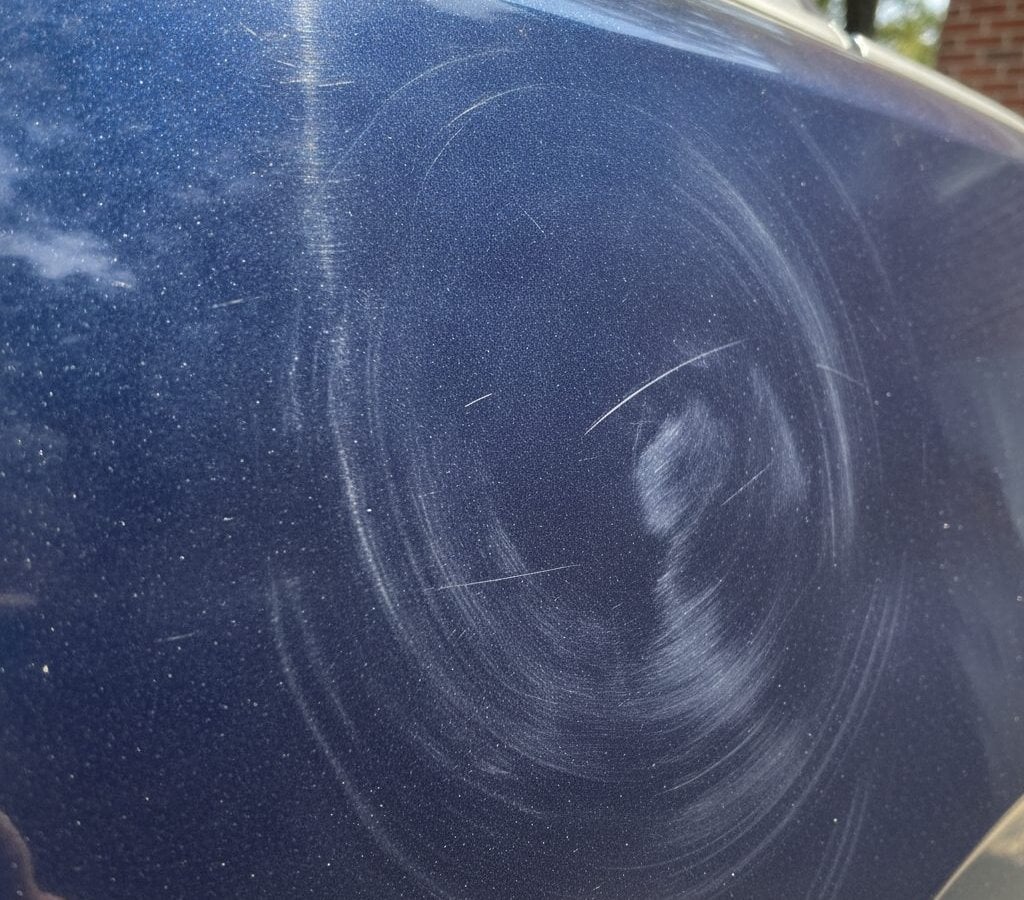
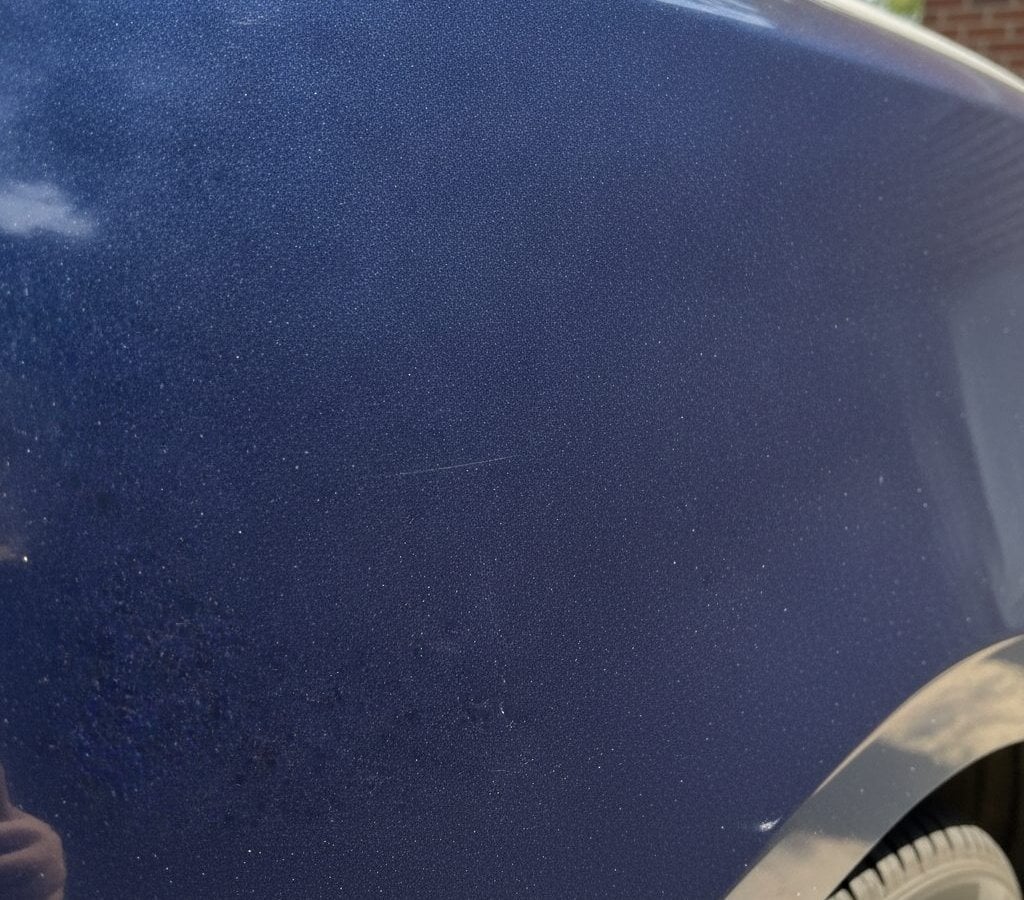
Before. After. Same vehicle, same day.
A recent paint correction job in Wake Forest. We photograph every job at delivery — these are real customer cars, not stock photos.
PROCESS
How a Wake Forest visit runs.
Measure
Paint thickness gauge on every panel. We do not polish blind.
Prep
Decon wash, iron remover, clay bar to give us a clean surface.
Test panel
Polish a small area to dial in compound, pad, and pressure.
Correct
Section by section, panel by panel, cross-hatch pattern.
Refine
Finer polish to clear up haze from the cut.
Wipe
IPA wipe to strip polish oils and reveal the real finish.
Protect
Sealant or wax. Corrected paint without protection oxidizes again fast.
WHAT THE RALEIGH-AREA CLIMATE DOES TO PAINT
The local conditions paint correction has to handle.
UV and heat
Roughly four months a year you'll see 90-plus afternoons here. UV index hits 9 or 10 on a clear July day. Paint that lives outside takes a measurable hit every season. Sealants flash off faster. Carnauba wax melts off the panel inside a month once summer settles in. So the chemistry we run is UV-stable across the board, with reapplication intervals built around NC sun.
Pollen and tree sap
Wake and Durham counties grow oaks, pines, and tulip poplars in tight canopy. Spring pollen coats every vehicle for six to eight weeks. Summer sap drops on parked cars year-round. Both are acidic on the clear coat if they sit. Quarterly decon isn't a luxury here. It's what keeps the paint surface honest. We size the wash schedule to your specific street and tree mix.
Brine and freeze-thaw
NC DOT pre-treats every winter weather event with brine. We get less salt than the mountains, but enough that undercarriage neglect turns into visible corrosion inside three to five years. A salt rinse after each brine event, plus an undercarriage flush in early spring, keeps frame rust from showing up at the resale inspection.
Why Wake Forest is different
Wake Forest is a historic small town that has absorbed two decades of country-club growth on the north side of the Triangle. The thing we always adjust for here: gated communities like Heritage and Hasentree require visitor passes — we coordinate gate codes the night before. That informs how aggressive our pre-rinse is and which decon step gets priority.
What Wake Forest customers say
-
★★★★★
I'm so happy that my car is SUPER CLEAN! We were really glad to get the Nissan detailed and, looking as close to brand new again as possible. We're so happy you are satisfied with your mobile car detailing service…
Courtney R. · Raleigh -
★★★★★
Amazing service at an amazing price! Big thank you to the team for being so professional. Car looks amazing. We hope you enjoy your ceramic coating and maintenance subscription!
David B. · Raleigh -
★★★★★
The whole experience was exceptional. They did a great job of communicating from time of us setting up the appointment. They basically made the car look brand new and I couldn't recommend them enough. They did a great job.
David L. · Raleigh
FAQS
Common questions for paint correction in Wake Forest.
How long does it last?
The correction itself is permanent — those defects are gone. New defects accumulate from washing, weather, and use, so the finish degrades over time. A ceramic coating on top extends the looks-corrected window.
What do you run into most on Wake Forest jobs?
Gated communities like Heritage and Hasentree require visitor passes — we coordinate gate codes the night before. We flag it during the walk-around so it is priced into the written scope, never a surprise on job day.
When do Wake Forest owners usually book paint correction?
April-May petal and pollen recovery is the heaviest window. Booking a week or two ahead of that window gets the pick of the schedule.
NEXT STEP
Need paint correction in Wake Forest?
Tell us about the vehicle. We come walk it, write a real treatment plan, and back the work with a written guarantee.
Book paint correction in Wake Forest
Fast reply by text — takes 30 seconds.