
Boat Detailing · Wake Forest
Boat detailing in Wake Forest.
Mobile boat detailing in Wake Forest. Wake Forest is a historic small town that has absorbed two decades of country-club growth on the north side of the Triangle, so gated communities like Heritage and Hasentree require visitor passes — we coordinate gate codes the night before. We bring the rig to your driveway and run the job hand-tight — no tunnel-wash shortcuts, no upsells while the polisher is running.
Get a Wake Forest quote → See full boat detailing service
5.0 from 37 local reviews
STRAIGHT ANSWER
Boat and watercraft detailing in Wake Forest. Gel coat restoration, vinyl seat clean, brightwork polish, hull wax. We come to your property or storage location.
What sets Wake Forest apart: a historic small town that has absorbed two decades of country-club growth on the north side of the Triangle.
LOCAL CONTEXT · WAKE FOREST
What boat detailing looks like in Wake Forest.
Driveways here are long concrete drives in the country-club communities, narrower drives in historic downtown, which shapes how we set up the rig. Wake Forest is a historic small town that has absorbed two decades of country-club growth on the north side of the Triangle. Most of our boat detailing work in Wake Forest comes from downtown Wake Forest, Heritage, Hasentree, Stonegate, Caddell Cove. Local climate note: dogwood and azalea blooms drop pollen and petal residue that needs hand-removal in spring.
BEFORE YOU BOOK
When to book it, and what to expect.
When boat detailing makes sense
Specialty vehicles need different chemistry, different patience, and different documentation. Classics, exotics, boats, RVs, custom builds. The right time to bring us in is when you've decided to invest properly, not when you want a $99 weekend special. Boats coming out of saltwater want oxidation reversal on the gel coat and marine-safe vinyl care. RVs need roof access and slide-out seal conditioning. Classics need slow hand work and respect for original paint that no body shop can put back. We tell you up front whether your vehicle is a fit for our style of work, and the timeline that actually fits the job.
What the walk-around covers
Original condition, photographed before any chemistry touches the surface. What previous detailers used (silicone-heavy products leave residue you can feel; cheap waxes build up under multiple coats). Material identification across every surface, because single-stage paint isn't refinished urethane isn't marine gel coat. Workspace requirements (RVs want 13-foot overhead, boats want trailer access, exotics want climate control for coating cure). Honest timeline. A full detail on a 32-foot Class A is 12 to 16 hours over two days. Half a day on a Porsche won't do what you're hoping for. We tell you which category your vehicle is in before we book.
The Wake Forest wrinkle
In Wake Forest specifically, the most common reason a boat detailing booking gets pushed back a week is gated communities like Heritage and Hasentree require visitor passes — we coordinate gate codes the night before. We try to flag that during the walk-around so the timeline holds.
Ready for boat detailing in Wake Forest?
Free walk-around quote. We come to you — most requests get a text back within 2 business hours.
WHAT WE SEE IN WAKE FOREST
What this looks like for Wake Forest drivers.
WF boat owners often have lake-house storage at Falls Lake or trailer to local destinations. Our boat detail handles freshwater contamination plus storage-related UV oxidation. Vinyl seats need UV-protectant conditioning to slow degradation from full-day lake exposure. Most jobs single-day for trailerable boats.
WHAT WE LOOK AT
What a boat detailing walk-around covers
The diagnosis is the actual work. Here is what we check before we touch your vehicle, and why each one matters.
WHAT WE DELIVER ON THE JOB
The work, step by step.
Every job follows the same checklist. We do not skip steps to hit a price, and we do not add steps without telling you. Here is the full sequence on a boat detailing job.
RESULT YOU CAN SEE
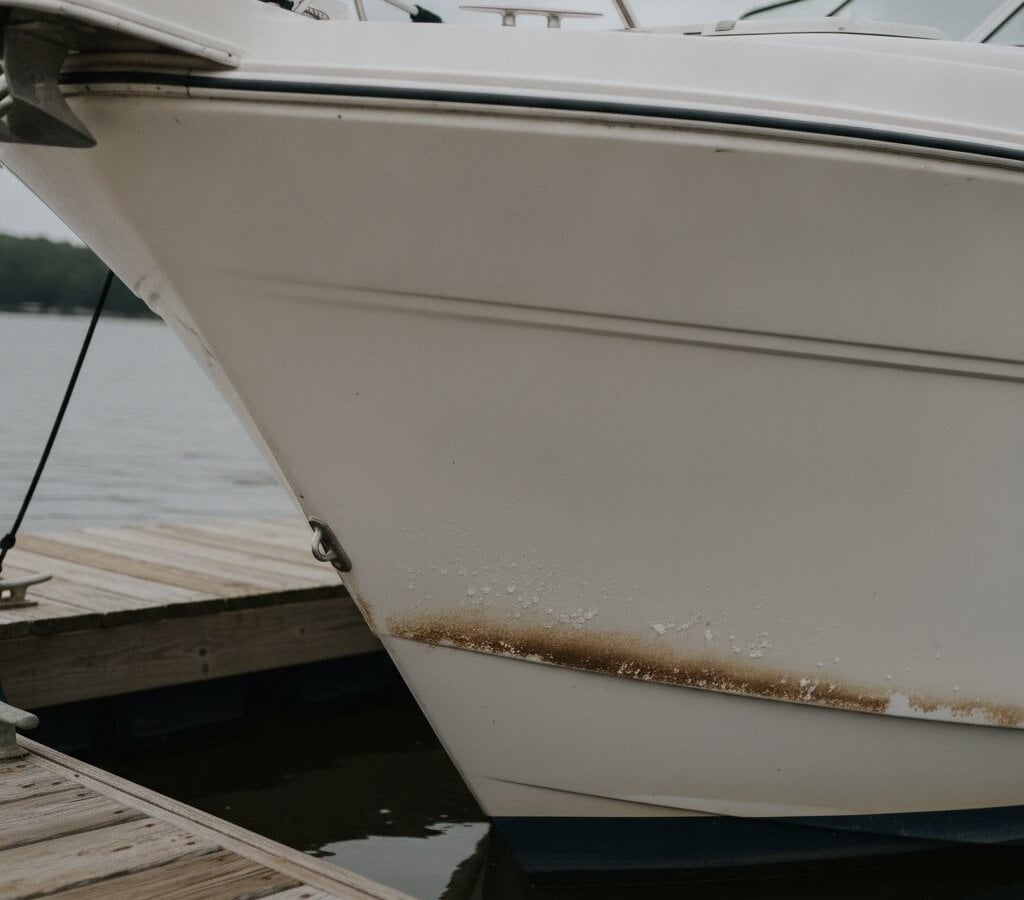
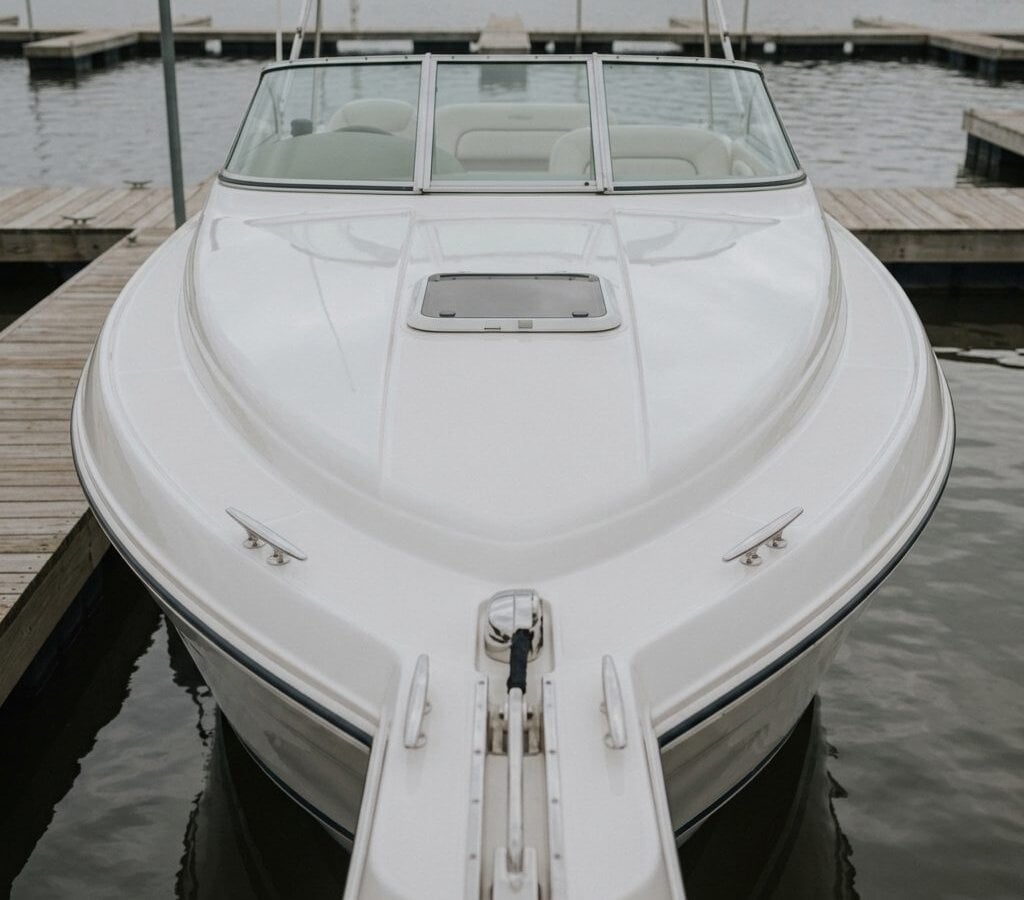
Before. After. Same vehicle, same day.
A recent boat detailing job in Wake Forest. We photograph every job at delivery — these are real customer cars, not stock photos.
PROCESS
How the job runs, start to handoff.
Inspection
We start with a walk-around to assess gel coat condition, oxidation level, and brightwork.
Wash
Marine-grade boat soap, foam pre-soak, soft mitt.
Decontaminate
Marine clay bar pulls bonded contamination off gel coat.
Polish
Single or two-stage compound with marine-specific products to remove oxidation and bring back gloss.
Seal
Marine sealant or wax. Different chemistry from automotive.
Interior
Vinyl clean and UV-stable conditioner. Carpet shampoo if equipped.
Final
Metal polish on stainless rails and aluminum trim.
WHAT THE RALEIGH-AREA CLIMATE DOES TO PAINT
The local conditions boat detailing has to handle.
UV and heat
Roughly four months a year you'll see 90-plus afternoons here. UV index hits 9 or 10 on a clear July day. Paint that lives outside takes a measurable hit every season. Sealants flash off faster. Carnauba wax melts off the panel inside a month once summer settles in. So the chemistry we run is UV-stable across the board, with reapplication intervals built around NC sun.
Pollen and tree sap
Wake and Durham counties grow oaks, pines, and tulip poplars in tight canopy. Spring pollen coats every vehicle for six to eight weeks. Summer sap drops on parked cars year-round. Both are acidic on the clear coat if they sit. Quarterly decon isn't a luxury here. It's what keeps the paint surface honest. We size the wash schedule to your specific street and tree mix.
Brine and freeze-thaw
NC DOT pre-treats every winter weather event with brine. We get less salt than the mountains, but enough that undercarriage neglect turns into visible corrosion inside three to five years. A salt rinse after each brine event, plus an undercarriage flush in early spring, keeps frame rust from showing up at the resale inspection.
Wake Forest job notes
The thing that catches most Wake Forest homeowners off-guard: dogwood and azalea blooms drop pollen and petal residue that needs hand-removal in spring. We also factor in that gated communities like Heritage and Hasentree require visitor passes — we coordinate gate codes the night before, which is why our spring and summer boat detailing jobs in Wake Forest look slightly different from the rest of the Triangle.
What Wake Forest customers say
-
★★★★★
The pro spent hours working on my car! He came with a tent and all equipment needed. He paid extra attention to the spots that I pointed out and even went over stains 4 times to get them out! Would…
Katie M. · Raleigh -
★★★★★
These guys are amazing!!! Not only on the job they did with our vehicle, they are also just well rounded young men that are so professional, kind, and humorous. It was our pleasure to detail your minivan!
Kayla H. · Raleigh -
★★★★★
The team was great! They were on time, efficient, and thorough. I'm super happy with how my car looks! I'll definitely use them again. The crew did an awesome job — thank you so much for the review!
Kelly S. · Raleigh
FAQS
Common questions for boat detailing in Wake Forest.
How often should I detail?
Spring open + fall close-out for stored boats. Mid-season detail if the boat is in heavy use.
Can you set up in a Wake Forest driveway like mine?
Almost certainly. Driveways here are long concrete drives in the country-club communities, narrower drives in historic downtown, and the rig adapts to the space — we work downtown Wake Forest and every other part of town weekly.
When do Wake Forest owners usually book boat detailing?
April-May petal and pollen recovery is the heaviest window. Booking a week or two ahead of that window gets the pick of the schedule.
NEXT STEP
Need boat detailing in Wake Forest?
Tell us about the vehicle. We come walk it, write a real treatment plan, and back the work with a written guarantee.
Book boat detailing in Wake Forest
Fast reply by text — takes 30 seconds.